Building 9 Blog
Expert tips, renovation guides, and practical home improvement advice for your next project.
What Are the Best Glass Block Windows from China?
Table of Contents
- Types of Glass Block Windows Manufactured in China
- Key Features That Define High-Quality Glass Block Windows
- How Chinese Glass Block Windows Compare in Performance and Design
- Leading Applications for Glass Block Windows in Residential and Commercial Buildings
- How to Select a Reliable Chinese Glass Block Window Supplier
- FAQS
- Conclusion
- Related Posts
What Are the Best Glass Block Windows from China?
Choosing the best Glass Block Windows from China requires more than comparing factory prices. The right product must balance daylight, privacy, strength, insulation, and installation quality. A clear block can brighten a narrow bathroom, while a frosted pattern can soften harsh street views. Small details matter.
Bob Rickey, a former technical specialist with Pittsburgh Corning, described the material simply: “Glass block is both a window and a wall.” That idea remains useful today. Chinese manufacturers offer many designs, including clear, wave, diamond, satin, and colored blocks. However, appearance alone cannot prove performance. A beautiful sample may still have weak edges, uneven dimensions, or poor packaging.
Reliable buyers should inspect factory experience, production records, test reports, and export references. Ask about compressive strength, thermal performance, acoustic behavior, and moisture resistance. Confirm whether the blocks are designed for mortar installation, silicone systems, or prefabricated panels. Request physical samples. Touch the surface. Check corners under direct light.
There is no universal winner. It depends on the room, climate, budget, and construction method. Some low-cost options look attractive but create extra labor later. That lesson is easy to ignore.
A trustworthy supplier should explain limitations, not promise perfection. Buyers should also confirm applicable building requirements with qualified local professionals. This article compares leading Chinese options through practical evidence, supplier transparency, and real project needs. The final choice should feel clear in daylight, secure in the hand, and sensible on the installation site.
Types of Glass Block Windows Manufactured in China
What Are the Best Glass Block Windows from China?
China manufactures several practical types of glass block windows for homes, offices, bathrooms, and stairwells. Hollow glass blocks are common because they provide privacy, daylight, and moderate thermal insulation. Their internal air space also reduces sound transmission, although performance depends on block thickness and installation quality.
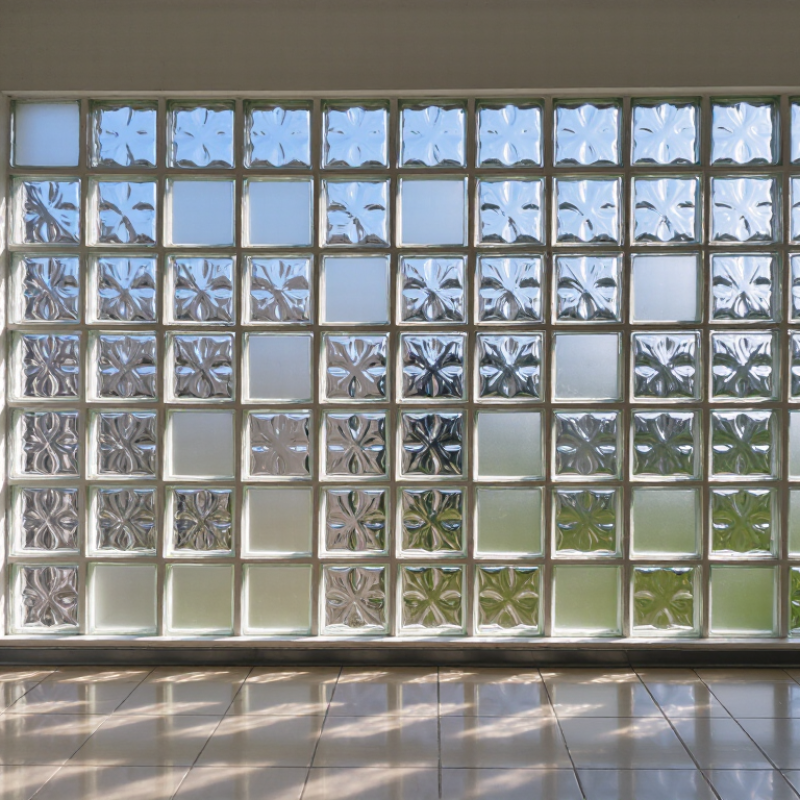
Patterned blocks create different visual effects. Rippled, fluted, and wave designs soften outlines while spreading sunlight across a room. Frosted blocks offer stronger privacy in bathrooms and ground-floor spaces. Colored blocks can add character, but their appearance may change under intense sunlight. Solid glass blocks are heavier and often suit decorative walls, partitions, or reinforced designs. Curved and corner blocks help installers build rounded walls without sharp visual breaks. Some factories also produce fire-resistant or reinforced options, but buyers should verify laboratory reports and local compliance documents.
Tips: Request physical samples before placing a large order. Check the block’s dimensions, weight, surface clarity, and edge finish. Ask how joints are sealed against moisture. A small installation test can reveal uneven color or sizing problems. Do not rely on photographs alone. Some product descriptions sound precise, yet actual light transmission may differ. I would also confirm packaging details, because chipped corners can turn a good design into wasted material. Professional installation remains important, especially for tall walls, exterior openings, and areas exposed to wind.
Key Features That Define High-Quality Glass Block Windows
What Are the Best Glass Block Windows from China?
High-quality glass block windows begin with consistent materials and precise production. Clear blocks should have even thickness, smooth edges, and minimal bubbles or distortion. These details affect both appearance and light distribution. A reliable supplier should provide glass thickness, heat-transfer data, water resistance results, and safety documentation. Do not judge quality from photographs alone.
Thermal performance matters in bedrooms, bathrooms, and exterior walls. Look for low U-values, tight joints, and a frame system suited to the local climate. Good blocks can reduce drafts, while textured surfaces improve privacy without blocking daylight.
Acoustic performance also deserves attention near busy roads. However, sound reduction depends on the complete wall assembly, not the block alone. This is often misunderstood.
Strong glass blocks should resist impact, moisture, and temperature changes. Ask for samples before approving a large order. Check the sample under daylight, inspect the corners, and compare several pieces for color consistency. Factory quality control, batch records, and independent testing add practical confidence.
Installation is equally important; poorly aligned joints can cause leaks or visible stress. I have seen attractive samples lose their appeal after careless fitting. That weakness deserves honest review. Fire performance, structural support, and local building requirements must also be verified before installation.
How Chinese Glass Block Windows Compare in Performance and Design
What Are the Best Glass Block Windows from China?
Chinese glass block windows can perform well when manufacturers control glass thickness, block dimensions, and joint quality. In practical comparisons, their strongest benefit is balanced daylight and privacy. A frosted or patterned surface softens sunlight while hiding clear views. This suits bathrooms, stairwells, basements, and street-facing walls.
Thermal performance varies more than appearance suggests. Hollow blocks may reduce heat transfer, but the frame, mortar joints, and installation gaps also matter. Acoustic results depend on wall thickness and surrounding construction. Well-made blocks should show consistent sizing, clean edges, and stable color. Ask for test reports covering thermal transmission, water resistance, and structural safety. Samples can reveal small defects that product photos hide. That matters.
Tips: Compare complete window systems, not glass blocks alone. Check dimensions, surface patterns, packaging, and replacement availability. Request samples before ordering. A site installer should also confirm local building requirements.
Design is another important difference. Chinese suppliers often provide many textures, colors, and clear-to-frosted combinations. This allows curved partitions, feature walls, and narrow privacy windows. However, more patterns can create uneven light across one wall. I would avoid choosing only by appearance. A beautiful block may clean poorly or feel visually heavy in a small room. No option is perfect. Performance depends on the whole assembly, climate, and workmanship.
| Evaluation Dimension | Typical Chinese Glass Block Window Characteristics | Comparable International Performance Context | Design and Application Implication |
|---|---|---|---|
| Common Module Sizes | Common modules include approximately 190 × 190 mm, 190 × 190 × 80–95 mm, 240 × 240 mm, and 300 × 300 mm. Actual dimensions vary by manufacturer and system. | These module sizes are broadly compatible with international glass block construction practices, although nominal dimensions and joint widths must be confirmed before installation. | Standard modules simplify layout planning, replacement, and coordination with masonry openings. |
| Glass Thickness | Most architectural glass blocks use a hollow glass body with an overall thickness commonly ranging from about 80 to 100 mm. | Comparable hollow glass blocks in Europe and North America generally use a similar overall depth for standard interior and exterior applications. | Greater depth can improve rigidity and privacy but may require deeper frames, sills, or wall details. |
| Light Transmission | Clear or lightly patterned blocks commonly transmit approximately 65%–80% of visible light. Strongly patterned or heavily frosted surfaces generally transmit less. | Performance is similar to other architectural glass block products; the pattern, surface texture, color, and viewing angle significantly affect the measured result. | Clear patterns are suitable for daylighting, while frosted, wave, and prismatic patterns provide more privacy. |
| Privacy Level | Privacy ranges from moderate to high. Frosted, satin, cross-ribbed, wave, and prismatic designs obscure outlines more effectively than clear designs. | Privacy classification is normally product-specific rather than country-specific because it depends on the glass pattern and viewing distance. | Pattern selection should be based on the required balance between daylight, visibility, and visual softness. |
| Thermal Transmittance | Standard hollow glass block assemblies commonly provide U-values around 2.5–3.0 W/m²·K. Special insulated or low-emissivity systems may achieve lower values, often around 1.5–2.0 W/m²·K. | These figures are broadly consistent with conventional glass block construction worldwide. Exact U-values depend on block geometry, cavity design, joints, frame, and test method. | Standard blocks provide daylight and privacy but may not match the insulation level of modern low-e double or triple glazing. |
| Solar Heat and Glare Control | Patterned and colored blocks diffuse sunlight and can reduce direct glare. They do not automatically provide the solar-control performance of coated insulated glass. | Solar heat-gain performance varies by pattern, color, and coating. A declared solar heat-gain coefficient or g-value should be requested for projects with strict energy targets. | Use shading, orientation control, or solar-control coatings where large areas face strong sun exposure. |
| Acoustic Performance | Common glass block walls may provide approximately 35–45 dB sound reduction, depending on block type, joint construction, perimeter sealing, and total wall build-up. | Comparable systems show a similar range, but laboratory ratings such as Rw or STC should not be assumed without a test report for the complete assembly. | Glass blocks can improve privacy and reduce ordinary airborne noise, but specialist acoustic systems may be needed near roads, airports, or industrial areas. |
| Wind and Structural Behavior | Glass blocks are non-load-bearing infill units. Exterior installations normally require reinforcement, movement joints, suitable perimeter framing, and engineering checks for local wind pressure. | International practice also treats glass block panels as engineered non-load-bearing assemblies rather than ordinary load-bearing masonry. | Large panels, tall walls, corners, and exposed elevations require project-specific structural detailing and anchorage. |
| Moisture Resistance | Glass itself is non-porous and resistant to water, but leakage performance depends on mortar or silicone joints, perimeter seals, flashing, drainage, and installation quality. | Water resistance is an assembly property in every market; the block alone cannot guarantee a weather-tight window. | Exterior units should include carefully detailed sills, head flashing, movement joints, and compatible sealants. |
| Fire Behavior | Glass is non-combustible, but the fire rating of a glass block wall depends on the block construction, joints, frame, reinforcement, and tested assembly. | International fire classifications also apply to the complete tested system rather than to an individual block alone. | Fire-rated applications require project-specific certification and installation details; ordinary decorative blocks should not be treated as fire-rated products. |
| Design Variety | Available options commonly include clear, frosted, wave, ribbed, prismatic, colored, curved, corner, and half-block formats. Custom colors and patterns may be available for larger orders. | The range is comparable to the international market, although availability depends on tooling, minimum order quantity, and production schedule. | Design variety supports bathroom partitions, stairwells, façades, feature walls, and privacy screens without sacrificing all daylight. |
| Color Stability | Color stability is generally strong for mass-colored glass. Surface coatings, films, and printed finishes require separate verification for ultraviolet exposure and weathering. | Mass-colored glass normally provides better long-term stability than applied decorative finishes in exterior conditions. | For façades, confirm whether the color is integrated into the glass or applied as a surface treatment. |
| Installation Methods | Common methods include mortar-and-reinforcement systems, silicone systems, prefabricated panels, and framed modular assemblies. | These methods are also used internationally, but local building codes and approved detailing requirements may differ. | Prefabricated systems can improve dimensional consistency and installation speed, while traditional mortar systems may be more flexible for small projects. |
| Quality-Control Points | Important checks include dimensional tolerance, visible defects, edge condition, pattern consistency, color uniformity, cavity integrity, packaging, and moisture protection during transport. | These checks are relevant to all glass block suppliers, regardless of country of origin. | A pre-shipment inspection and approved sample can reduce the risk of mixed colors, chipped edges, and inconsistent patterns. |
| Best-Fit Applications | Common applications include bathrooms, stairwells, corridors, basements, interior partitions, privacy façades, daylight panels, and decorative walls. | Applications are broadly the same as those served by glass blocks from other regions. | Glass blocks are most effective where daylight and privacy are more important than maximum thermal insulation or unrestricted views. |
| Overall Performance Position | Chinese glass block products can offer competitive module variety, decorative options, and project customization. Performance should be judged from verified technical documents rather than country of origin alone. | When dimensions, test methods, and assembly details are equivalent, performance is primarily determined by product design, quality control, and installation workmanship. | The best selection is the system with suitable thermal, acoustic, structural, fire, and weather data for the intended project. |
Leading Applications for Glass Block Windows in Residential and Commercial Buildings
What Are the Best Glass Block Windows from China?
Leading Applications for Glass Block Windows in Residential and Commercial Buildings
Glass block windows from China suit spaces needing daylight, privacy, and durable enclosure. In homes, they work well in bathrooms, stairwells, basements, and kitchen extensions. Diffused light softens dark interiors without exposing daily activity. Textured blocks can also create a calm visual surface. However, ventilation must be planned separately because fixed blocks do not replace operable windows.
Commercial buildings use glass blocks for clinic partitions, school corridors, retail displays, and office reception areas. They divide rooms while keeping shared spaces visually connected. In warehouses, reinforced assemblies can bring daylight into service zones. Fire-rated or impact-resistant systems may be necessary for specific projects. Local codes and professional calculations should guide those choices.
When comparing Chinese suppliers, request test reports, installation details, and clear dimensional tolerances. Check whether the blocks match the proposed mortar, frame, and reinforcement system. Strong export packaging matters too. A cracked corner can delay an entire installation. I have seen attractive designs fail because installers ignored joint width and drainage. That mistake is avoidable, but product instructions are not always complete. Buyers should ask direct questions about thermal performance, acoustic ratings, moisture resistance, and replacement availability. The best option is not simply the lowest price. It is the system that fits the building, climate, and installer’s actual skill.
How to Select a Reliable Chinese Glass Block Window Supplier
What Are the Best Glass Block Windows from China?
How to Select a Reliable Chinese Glass Block Window Supplier
A reliable Chinese supplier should explain more than window styles and prices. Ask for glass thickness, block dimensions, thermal performance, light transmission, and frame materials. The best options match your climate, building use, and installation method. A bathroom window needs privacy. A stairwell may need stronger daylight. Request physical samples before placing a large order. Check the surface carefully for bubbles, uneven edges, color differences, and weak joints. Small defects become obvious after installation.
Supplier verification requires practical evidence. Review factory photos, production records, quality procedures, and export experience. Better suppliers provide current test reports from qualified laboratories. Confirm whether those reports match the exact product you will receive. Ask about impact resistance, water tightness, insulation, and fire performance where relevant. A video call can reveal storage conditions and packaging methods. Cracked corners often begin with poor protection during transport. That detail matters.
Communication is another quality signal. The supplier should answer technical questions clearly and provide drawings, packing lists, lead times, and warranty terms. Ask for references from comparable projects, not only large displays. Payment terms should be documented and understandable. I once underestimated the importance of replacement procedures; that was a costly lesson. A supplier may look professional yet respond slowly after receiving payment. Leave room for doubt. Compare two or three factories, inspect a sample batch, and record every agreed specification before production.
What Are the Best Glass Block Windows from China?
How to Select a Reliable Chinese Glass Block Window Supplier
The chart presents a practical 100-point evaluation framework for comparing glass block window suppliers. Product performance, quality control, documentation, customization capability, and delivery reliability should be verified through technical datasheets, sample inspection, test reports, and production records rather than company names alone.
FAQS
It uses consistent materials, even thickness, smooth edges, and minimal bubbles. Light should pass evenly through each block. Inspect real samples, not photographs alone.
Request test reports, dimensional tolerances, installation details, and safety documents. Ask for batch records and independent testing. Samples reveal more than polished images.
They can reduce drafts when joints are tight and the frame suits the local climate. Check U-values and heat-transfer data. Results depend on the complete wall.
Yes, they provide daylight while limiting visibility. Textured surfaces work well near showers and stairwells. Fixed blocks do not provide ventilation. Plan airflow separately.
They may help, especially with a suitable wall assembly. Sound reduction does not depend on the blocks alone. Nearby traffic requires complete acoustic planning.
View them in daylight and inspect every corner. Compare several pieces for color consistency and distortion. Small differences matter. I would not approve a large order casually.
Poor alignment can create leaks, visible stress, and uneven joints. Match the blocks with suitable mortar, frames, and reinforcement. Attractive samples can look disappointing after careless fitting.
Confirm impact resistance, moisture performance, fire requirements, structural support, and local building rules. Check packaging and replacement availability. A cracked corner can delay the project.
Conclusion
China manufactures a wide range of Glass Block Windows, including clear, textured, colored, frosted, fire-rated, and decorative styles for different architectural needs. High-quality products are defined by uniform dimensions, strong glass, reliable sealing, good light transmission, privacy control, thermal insulation, and resistance to moisture and impact. Their modular construction allows flexible combinations, making them suitable for both modern and traditional designs.
In residential buildings, Glass Block Windows are commonly used in bathrooms, stairwells, basements, kitchens, and partition walls, while commercial applications include offices, hotels, retail spaces, public facilities, and industrial buildings. When comparing Chinese products, buyers should evaluate performance, appearance, installation methods, customization options, and compliance with relevant quality requirements. Selecting a reliable supplier also requires checking manufacturing experience, material consistency, quality-control procedures, sample approval, production capacity, packaging, communication, and after-sales support to ensure a dependable long-term solution.

Blog Tags: