Ideas & Inspiration

Building 9 Blog

Expert tips, renovation guides, and practical home improvement advice for your next project.

0%

Choosing Bathroom Vanity Tops in 2026 requires more than matching a color to your wall paint. The surface must handle water, cosmetics, heat, cleaning products, and daily impact. A beautiful top can still fail if its edges chip easily or its basin fit remains awkward. I have seen homeowners focus on veining first, then regret ignoring cabinet depth and plumbing clearance. Measure the vanity, wall, faucet holes, backsplash, and door swing before comparing materials.

Kerrie Kelly, FASID, a respected interior designer and bathroom design authority, said, “Good design is about creating spaces that support the way people live.” That principle matters here. Quartz offers consistent patterns and simple maintenance. Natural stone provides individual character, but it needs informed sealing and care. Porcelain can create a slim, modern profile, although some installations require highly skilled fabrication. Solid surface allows seamless integrations and practical repairs. Each choice carries trade-offs.

The 2026 market also brings stronger interest in recycled content, low-maintenance finishes, and integrated sinks. Certifications and manufacturer warranties deserve careful checking. So do installation reviews from qualified professionals. Do not trust a showroom sample completely. Lighting can change its color dramatically. A pale top may look warm at home and gray in a store. Even expert recommendations need context. Household routines differ. Children, hard water, frequent styling tools, and limited cleaning time should influence the decision. There is no flawless material. The best Bathroom Vanity Tops choice balances durability, maintenance, appearance, budget, and honest expectations.
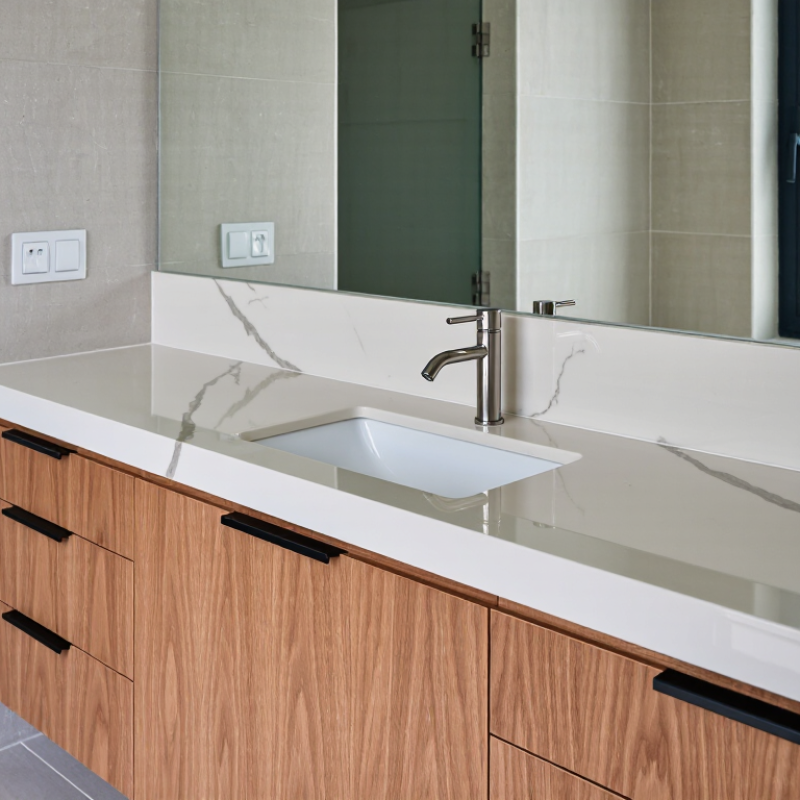
How to Choose Bathroom Vanity Tops in 2026?

Bathroom Vanity Top Basics: Materials, Sizes, Styles, and Construction

Choosing a bathroom vanity top in 2026 starts with materials, size, style, and construction. In bathroom installations, I have learned that material affects maintenance more than appearance. Quartz resists stains and offers consistent color, but hot styling tools can damage its surface. Natural stone creates unique movement, although it needs periodic sealing. Solid-surface material allows discreet repairs and seamless sinks. Ceramic and porcelain handle moisture well, while wood adds warmth but demands careful sealing. Looks can mislead.

Measure the cabinet, wall space, plumbing, and door swing before ordering. A typical top extends about one inch beyond the cabinet. Check whether the wall is square, especially in older homes. Even a small error can create an uneven backsplash gap. Construction details matter too. Decide between an integrated, undermount, or vessel sink. Confirm faucet-hole spacing and drain alignment. Heavy stone tops may require stronger cabinet support. A dry fit can reveal problems early.

Style should support the room’s daily use. Thin edges suit clean, modern bathrooms, while thicker edges and raised backsplashes create a more traditional feel. Light colors can make a narrow bathroom feel larger, but dark surfaces show water spots quickly. I once favored a dramatic finish and underestimated morning cleaning. That choice looked excellent in a sample. It felt less practical beside a busy family sink. Review samples under your actual bathroom lighting, not only in a showroom.

Assessing Your Bathroom Layout, Storage Needs, and Installation Limits

How to Choose Bathroom Vanity Tops in 2026?

Assessing Your Bathroom Layout, Storage Needs, and Installation Limits

Begin with the room, not the vanity top. Measure the finished wall, door swing, toilet clearance, and walking space. Leave enough room to open drawers without striking nearby fixtures. A narrow bathroom may need a shallow top, even when a deeper surface looks more convenient. Mark the plumbing centerline on the wall. This small detail prevents expensive adjustments later.

Storage needs should guide the vanity design. Deep drawers hold towels well, but they may conflict with drain pipes. Cabinet doors can work better around awkward plumbing. Check whether your daily items need open access or hidden storage. In practice, I recheck measurements twice because walls are rarely perfectly square. A beautiful top can still fail if it blocks a medicine cabinet or bathroom door. Also inspect the floor, wall studs, and delivery path before ordering. Heavy stone-like materials may require stronger support and careful handling.

Tips: Use cardboard to create a full-size vanity template. Place it on the floor and test the door swing. Confirm faucet holes, sink position, backsplash height, and wall support with the installer. Ask about local plumbing and electrical requirements. I prefer leaving a small adjustment allowance, though it can make the final plan less exact. That compromise is often safer. Test your routine there. Reach the towel, open the drawer, and clean around the basin.

Comparing Vanity Top Materials for Durability, Care, and Cost

How to Choose Bathroom Vanity Tops in 2026?

Quartz remains a practical choice for busy bathrooms. It resists stains and needs little sealing. However, its resin content can discolor under prolonged heat or strong sunlight. Granite offers excellent scratch resistance, but porous sections still need periodic sealing. The Natural Stone Institute recommends following the fabricator’s sealing guidance, not a fixed calendar. Marble looks refined, yet acidic cleaners can etch its surface quickly. That weakness is easy to underestimate.

Porcelain deserves closer attention. ANSI A137.1 classifies porcelain tile at 0.5% water absorption or less, supporting strong moisture resistance. It also handles heat well, although chipped edges can be difficult to repair invisibly. Solid surface materials provide seamless integrated sinks and simple repairs, but they scratch more easily than stone. Cost depends on thickness, cutouts, edge profiles, and installation. The 2024 Remodeling Cost vs. Value Report shows that bathroom upgrades recover only part of their cost, so an expensive top may not improve resale value proportionally. This is where many buying decisions become less certain.

Tips: Ask for a written quote covering templates, sink cutouts, backsplash, sealing, delivery, and installation. Place a warm curling tool on a heat-resistant pad. Use a pH-neutral cleaner. Test a hidden area first. In real bathrooms, careless cleaning causes more damage than daily water. That part is often overlooked.

Matching Colors, Edges, Sinks, and Fixtures to Your Bathroom Design

Choosing a bathroom vanity top in 2026 means coordinating surfaces, not chasing a single trend. In renovation projects, I compare samples beside floor tile and wall paint under morning and evening light. White can look blue near cool LEDs, while warm beige may appear yellow. For compact bathrooms, pale stone tones reflect light and often make water marks less obvious. Darker tops add depth, but they demand more frequent wiping. Color matters.

Edge profiles should echo the room’s character. A slim eased edge suits clean, modern cabinetry, while a rounded edge feels softer in family bathrooms. Consider the user experience: sharp corners can catch clothing and feel uncomfortable in narrow walkways.

An integrated basin creates a continuous surface with fewer joints. An undermount sink keeps the counter visually open and makes sweeping water inward easier. A vessel sink adds height and personality, yet it reduces usable wall clearance. Measure faucet reach carefully.

Match fixtures by undertone, not just finish. A brushed warm metal can support creamy surfaces, while polished chrome often suits cooler whites. Mixing finishes can work when one finish clearly leads and the second appears in small details. Check faucet holes, backsplash height, cabinet depth, and plumbing access before ordering. I once approved a beautiful sample that looked too busy beside patterned tile; the quieter option worked better. That mistake changed my process. Request a full-size sample when possible, and confirm maintenance instructions with the fabricator.

Checking Measurements, Budget, Maintenance, and Long-Term Value

How to Choose Bathroom Vanity Tops in 2026?

Begin with accurate measurements, not showroom excitement. Measure wall-to-wall width, cabinet depth, backsplash height, sink position, and door clearance. Record plumbing locations too. A top can look perfect but fail when the drain sits off-center. Leave room for installation tolerance. I once trusted a “standard” 60-inch cabinet measurement and missed a narrow side gap. Small errors become expensive quickly.

Budget beyond the slab. Include the sink, faucet holes, edge profile, backsplash, delivery, installation, and future sealing. Quartz usually reduces routine maintenance, while natural stone may require periodic sealing. The 2024 U.S. Houzz Bathroom Trends Study identifies quartz as a leading choice among renovating homeowners. The 2024 Cost vs. Value Report estimates that a midrange bathroom remodel recovers roughly two-thirds of its cost at resale, although local results vary. Long-term value is not only resale value. It is fewer stains, simpler cleaning, and a surface that still feels solid after years.

Tips: Use a paper template before ordering. Place toiletries on it. Check water marks under your current sink after one week. That evidence matters more than optimistic showroom lighting. Ask the installer about seam placement and warranty terms. Also, do not assume maintenance-free means damage-proof. Harsh cleaners, standing water, and careless heat can still leave visible marks. Reconsidering a cheaper top is sensible if replacement would disrupt the bathroom again.

FAQS

Which materials work well for a bathroom vanity top?

Quartz resists stains and offers consistent color. Natural stone looks unique but needs periodic sealing. Ceramic and porcelain handle moisture well. Wood feels warm, but sealing can become a chore.

Can hot styling tools damage a vanity top?

Yes, especially on quartz-like surfaces. Place hot tools on a heat-resistant pad. Do not trust the surface sample alone. I underestimated this once.

How should I measure for a vanity top?

Measure the finished wall, cabinet, plumbing, and door swing. A typical top extends about one inch beyond the cabinet. Check whether the wall is square. Old walls often are not.

Why does cabinet depth matter?

A deep top may block walking space or nearby fixtures. Use a shallow design in a narrow bathroom. Leave room for drawers to open fully. Cardboard helps test the footprint.

What sink construction should I consider?

Integrated sinks create a smooth, easy-to-clean surface. Undermount sinks keep the counter edge visually clean. Vessel sinks add height and require careful faucet planning. Choose based on cleaning and daily reach.

How do I prevent plumbing conflicts?

Mark the plumbing centerline before ordering. Deep drawers may strike drain pipes. Cabinet doors can work better around awkward plumbing. Confirm drain alignment with the installer.

Does a vanity top need extra cabinet support?

Heavy stone-like materials may need stronger support. Inspect cabinet construction, wall studs, and floor conditions. A dry fit can reveal weak points early. This step is easy to skip.

How does lighting affect the color choice?

Review samples under your actual bathroom lighting. Light colors can make a narrow room feel larger. Dark surfaces show water spots quickly. The showroom sample may deceive you.

What small details are easy to overlook?

Confirm faucet-hole spacing, backsplash height, and sink position. Check the delivery path before ordering. Test towel access, drawer movement, and basin cleaning. My attractive choice was not very practical.

Conclusion

Choosing the right Bathroom Vanity Tops begins with understanding the basics, including available materials, standard and custom sizes, design styles, and construction quality. Start by evaluating your bathroom layout, wall space, plumbing position, storage requirements, and installation limitations. These factors will help determine whether you need a single or double sink top, an integrated basin, or a separate sink design.

Next, compare materials according to durability, stain resistance, maintenance needs, appearance, and overall cost. Consider how colors, edge profiles, sink shapes, faucets, and other fixtures will work together to create a balanced bathroom design. Before purchasing, carefully verify measurements, countertop thickness, backsplash requirements, and installation details. A realistic budget should include accessories, delivery, fitting, and future upkeep. By balancing style, function, maintenance, and long-term value, you can select a vanity top that looks attractive, performs reliably, and suits your bathroom for years to come.

Isabella

Isabella

Isabella is a dedicated professional marketer with a deep understanding of the company's products and services. With a passion for driving engagement and building brand awareness, she plays a crucial role in our marketing team. Isabella's expertise in the industry ensures that she is always......