Choosing Pre-Hung Interior Doors in 2026 is not just a matter of matching a panel to your décor. A pre-hung unit arrives with its door already mounted in a frame, which can simplify installation—but only when the unit suits the opening. A few millimeters can matter. So can wall thickness, hinge position, swing direction, and the finished floor height.
Door-installation expert Gary Katz’s guidance can be paraphrased this way: “A door works well only when its frame is fitted accurately to the opening.” This is a practical reminder, not a substitute for checking the manufacturer’s instructions or measuring carefully. Measure the opening at several points. Check whether the floor slopes. Look at the jamb depth beside the drywall, not just the door’s appearance in a showroom.
This guide will help you compare materials, styles, sizes, and hardware, then spot details that are easy to overlook. Solid-core doors may soften sound between rooms; hollow-core doors are lighter and often cost less. Neither is automatically right for every space. A bathroom may need privacy and moisture-aware materials, while a bedroom might call for better sound control. Small details count. The hinge finish should suit the other hardware, but the rough opening matters more. And even careful planning has limits: older homes can have uneven walls, so a standard-size unit may still need adjustment. Before buying, verify measurements and installation requirements with the supplier or a qualified installer.
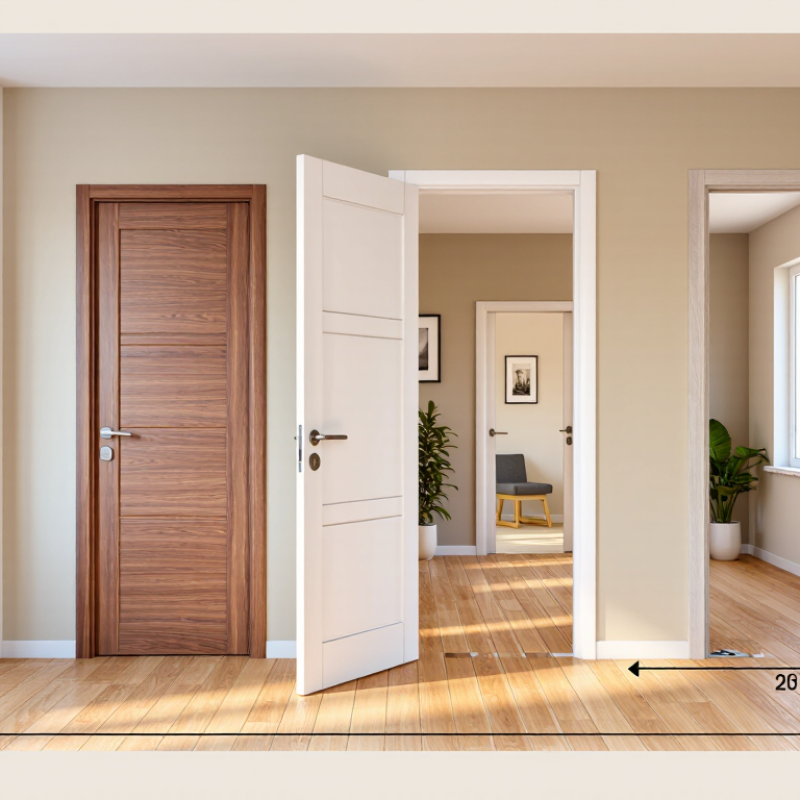
Measure the Opening and Check Wall Conditions
Before choosing a pre-hung interior door, measure the rough opening, not just the old door panel. Remove trim if practical, then measure width at the top, middle, and bottom. Record the smallest result. Measure height on both sides, from the subfloor to the top of the opening. Check the floor beneath the door, too; carpet or a future flooring layer can change the needed clearance. Write the numbers down. Memory is unreliable.
Wall conditions matter just as much. Measure wall thickness, including drywall on both sides, so the jamb can sit flush with the finished wall. Use a level to check each side of the opening and a straightedge to spot bowed framing. Look for loose plaster, uneven drywall, and old shims. These small details can make a correctly sized unit difficult to install. A few millimeters can show at the casing.
In older homes, openings are often out of square. That is normal, but it deserves attention. I have seen measurements taken in one spot lead to a door that needed extra adjustment. Check diagonals if the opening looks skewed, and compare your notes with the door unit’s stated rough-opening requirements. If flooring or wall repairs are still planned, measure again afterward. It may feel repetitive, but it is cheaper than forcing the jamb into a poor fit.
Define Privacy, Sound, and Durability Requirements
A prehung interior door should solve a room’s actual problem, not just match its trim. For a bedroom beside a busy hallway, sound and privacy may matter more than a decorative panel. The World Health Organization’s 2009 Night Noise Guidelines identify 30 dB indoors as a sleep-protection target. A door alone cannot guarantee that level; gaps beneath it and around the frame can undermine sound control. Choose a tested assembly, and check whether its rating includes the frame, seals, and threshold. ASTM E413 classifies sound insulation using laboratory test results. The rating belongs to the tested assembly, not every door that looks similar. Small detail. Big difference.
Durability depends on use and conditions. A bathroom door may face repeated humidity changes, while a closet door sees frequent, quick swings. Check the manufacturer’s documented performance level against ANSI/WDMA I.S. 1A, the industry standard for architectural wood flush doors. Also inspect practical details: hinge screw length, frame material, latch alignment, and whether the finish can handle routine cleaning. For a quiet study, a solid-core option may be worth comparing with a hollow-core door, but installation gaps still matter. I would not choose by core type alone. That shortcut is tempting, and sometimes wrong. A tight frame and careful fitting can make the difference between a door that feels private and one that merely closes.
How to Choose Prehung Interior Doors in 2026: Define Privacy, Sound, and Durability Requirements
Sound privacy reference points: higher Sound Transmission Class (STC) ratings generally mean less airborne sound passes through a tested assembly.
How to use this: STC 25–30 offers limited speech privacy; around 35 is a useful reference for reducing speech intelligibility; 40–45 indicates stronger sound separation. These are rule-of-thumb interpretations, not guaranteed door performance. Choose a tested door-and-frame assembly with effective perimeter seals; gaps and sound paths through adjoining walls can reduce privacy. For durability, match the door’s core, finish, and hardware to expected traffic and moisture exposure.
The chart shows STC rating reference values, not test results for specific doors. Actual performance depends on the complete installed assembly.
Compare Door Materials, Cores, and Design Options
How to Choose Pre Hung Interior Doors in 2026?
Compare Door Materials, Cores, and Design Options
A prehung door arrives mounted in its frame, which can simplify installation when the rough opening is square and correctly sized. Start by comparing materials. Solid wood offers natural grain and can often be refinished, but it may cost more and respond to humidity. Engineered wood and molded composite options can provide a consistent finish with less upkeep. Check the manufacturer’s care guidance, especially for bathrooms or laundry rooms. A beautiful finish is still frustrating if it does not suit the room.
Core choice affects weight, sound, and feel. Hollow-core doors are lighter and often economical, but they provide less sound separation. Solid-core doors feel sturdier and can reduce everyday noise between bedrooms or a home office. They are heavier, so confirm the frame and hinges are appropriate. Design matters, too: flush doors suit clean, simple interiors, while panel profiles add definition. Glazed options bring light into darker spaces, though they offer less privacy. It is easy to focus on style and overlook swing direction or clearance.
Tips: Measure the opening at several points, and check wall thickness before ordering. Feel the difference between core samples if available. Measure twice. Compare finishes in the room’s actual light; screens can make colors look warmer or cooler than they are.
Match the Prehung Unit to the Opening, Swing, and Jamb
How to Choose Pre-Hung Interior Doors in 2026?
Match the Prehung Unit to the Opening, Swing, and Jamb
A prehung door arrives attached to a frame, so the unit must suit the opening—not just the door width. Measure the rough opening at the top, middle, and bottom, then compare its height and width with the manufacturer’s listed requirements. Check the wall thickness, too. It determines whether the jamb will sit flush with the finished wall. Real openings are rarely perfect. Older framing may be slightly out of square, and ignoring that can turn a simple installation into a frustrating one.
Choose the swing by standing on the side where you expect to pull the door toward you. Note which side the hinges belong on and whether the door should open left or right. Then check nearby walls, cabinets, and light switches for possible collisions. A door that swings into a narrow hallway can feel awkward every day. For the jamb, account for both wall thickness and finish materials, such as drywall or tile. If these details are unclear, pause and remeasure before ordering.
Tips: Measure twice, and record each result. Use a level to check the opening’s sides and header. Leave room for shimming, but don’t assume shims can fix a badly mismatched unit. When in doubt, ask an installer to verify the opening on site.
Check Hardware, Code Requirements, and Total Installed Cost
How to Choose Pre Hung Interior Doors in 2026?
Check Hardware, Code Requirements, and Total Installed Cost
A prehung door includes its frame, but the quoted price may not cover everything around it. Ask for a written, itemized estimate covering the slab, jamb, hinges, latch, casing, removal, disposal, installation, and painting. Check that the hinge hand and swing suit the room; a door that hits a vanity gets annoying fast. Measure the rough opening, wall thickness, and floor clearance. Measure carefully.
Hardware should feel solid and operate smoothly, without a loose latch or squeaking hinges. Confirm the included lockset suits the room, and ask whether hinges and strike plates are included. Code needs depend on location and use. For example, garage-to-house openings and accessible routes may have specific requirements under locally adopted codes. The 2010 ADA Standards call for a 32-inch minimum clear opening where the door is on an accessible route. That standard does not apply to every home interior door. Check with your building department before ordering.
Budget for surprises. The 2024 Houzz & Home Study reported a $24,000 median renovation spend among surveyed U.S. homeowners for 2023; that is a whole-home figure, not a door-price estimate. Still, it shows why a small project deserves a clear scope. Compare installed quotes, not just unit prices, and ask about wall repairs, trim changes, and disposal. I would leave room for patching; older walls rarely cooperate. Small details matter.
FAQS
Measure the rough opening, not only the old door panel. Check width at the top, middle, and bottom. Use the smallest measurement. Measure height on both sides, from the subfloor to the opening’s top.
Carpet or planned flooring can reduce the space beneath the door. Check the finished floor height before ordering. A small gap matters.
Measure wall thickness, including drywall on both sides. Check the opening with a level and straightedge. Bowed framing, loose plaster, or uneven drywall can leave visible gaps near the casing.
Older openings may be out of square. Compare the diagonals and the unit’s rough-opening requirements. If repairs or flooring are still planned, measure again afterward. I still double-check.
Ask for an itemized written estimate. It should cover the door, jamb, hinges, latch, casing, removal, disposal, installation, and painting. Check for wall repairs, too.
Test that the latch operates smoothly and the hinges feel secure. Confirm whether hinges and strike plates are included. Check the door swing; it should not hit a vanity or other nearby fixture.
Requirements depend on location and use. Some accessible routes require a 32-inch minimum clear opening under applicable standards. Check with your local building department before ordering.
Compare installed quotes, not just unit prices. Include trim changes, disposal, and possible wall patching. Older walls can be unpredictable. Leave some room in the budget.
Conclusion
Choosing Pre-Hung Interior Doors in 2026 starts with accurate measurements. Check the width, height, and depth of the rough opening, and inspect the walls and floor for uneven surfaces that could affect installation. Next, consider how each room is used: bedrooms may need privacy, shared spaces may benefit from sound reduction, and high-traffic areas call for durable construction.
Compare available materials, core types, and designs to balance appearance, performance, and maintenance. Then confirm that the unit’s size, handing, swing direction, and jamb depth suit the opening and surrounding wall. Before making a decision, review included hardware, applicable building requirements, and the full installed cost, including preparation and labor. Considering these details together can help you select a door that fits properly, functions reliably, and complements the room.