Ideas & Inspiration

Building 9 Blog

Expert tips, renovation guides, and practical home improvement advice for your next project.

0%

A kitchen backsplash does more than protect the wall behind a sink or range. It catches splashes, frames the counters, and gives the room a clear visual anchor. The right choice can make a compact kitchen feel brighter; the wrong grout color can make every crumb stand out. Small details matter.

Industry reports offer useful context. The National Kitchen & Bath Association’s 2024 Kitchen Trends Report reflects input from design professionals and highlights lasting appeal, natural influences, and practical performance. Houzz’s U.S. kitchen research also tracks homeowners’ renovation choices, including finishes and materials. These reports help distinguish durable ideas from short-lived social-media trends. They do not, however, prove that one tile style suits every home.

There is no supplied source text here to verify a named backsplash specialist’s exact words, so I won’t invent a quotation. A reliable selection still begins with real-world questions: How much cooking happens here? Will the grout be easy to maintain? Does the tile work with the countertop, cabinet color, and available light? Glazed ceramic, handmade-look squares, slim rectangles, patterned encaustic-style designs, and large-format porcelain each create a different effect. Some offer texture; others keep the wall calm.

This guide explores the top 10 Backsplash Tile ideas for kitchens, with practical considerations alongside visual appeal. Expect useful options, not one perfect answer. Each kitchen is different.
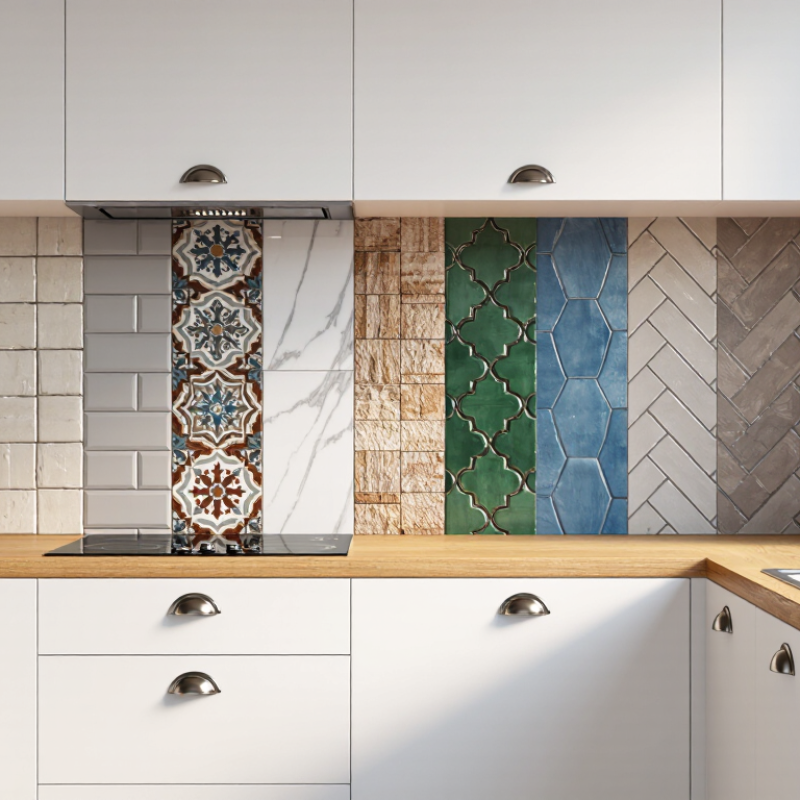
What Are the Top 10 Backsplash Tile Ideas for Kitchens?

What a Kitchen Backsplash Does and Why Tile Matters

What Are the Top 10 Backsplash Tile Ideas for Kitchens?
What a Kitchen Backsplash Does and Why Tile Matters

A backsplash catches splashes, grease, and everyday cooking mess before they stain the wall. It also frames the counter and can make a compact kitchen feel brighter. Tile is popular because it comes in varied sizes, finishes, and colors, and individual pieces can be replaced if damaged. Houzz’s 2024 U.S. Kitchen Trends Study found tile was the most common backsplash material, chosen by roughly seven in ten homeowners upgrading their backsplash. That preference makes sense, but grout still needs attention. Looks matter. So does maintenance.

Tips: Bring home tile samples and view them beside your counter in morning and evening light. Check how grout color changes the pattern. For a busy cooktop, ask a qualified installer about suitable grout, wall preparation, and cleaning needs before choosing a finish.

A glossy tile can reflect light, yet show smears more clearly. A textured surface adds character, but grease may be harder to remove from its crevices. The Tile Council of North America’s Handbook outlines recognized tile installation methods; correct preparation matters as much as the tile itself. A backsplash should resist routine splashes, but it is not a substitute for proper waterproofing where that is required. The best choice is practical for your cooking habits, not merely attractive in a showroom.

What Are the Top 10 Backsplash Tile Ideas for Kitchens?

A kitchen backsplash helps protect the wall from splashes and everyday mess. Tile is a popular choice because glazed surfaces are generally easy to wipe clean, while the tile shape, color, and layout can add character to the kitchen.

10 Tile Ideas by Typical Tile Face Dimension

Tile sizes below are representative nominal dimensions in inches. Actual sizes vary by product and manufacturer; mosaic measurements refer to individual pieces.

How to Choose Tile for Your Kitchen Backsplash

Choosing a kitchen backsplash starts with the surfaces it must live beside. Houzz’s 2024 U.S. Kitchen Trends Study reports that 71% of renovating homeowners updated their backsplash, showing how often it becomes part of a kitchen refresh. Treat popular styles as inspiration, not a prescription. A soft white subway tile can brighten a narrow galley, while a small mosaic adds texture behind open shelves. Handmade-look ceramic brings gentle variation, but uneven edges may make grout lines harder to keep tidy. Small samples matter.

Check the tile’s care requirements, size, and finish before committing. Porcelain is dense and practical near a busy sink; glazed ceramic offers many colors and is generally easy to wipe clean. Polished surfaces can show splashes, while textured tiles may collect grease in cooking zones. Hold samples beside your countertop and cabinet doors, then view them in morning and evening light. A strong contrast can look striking in a showroom and feel tiring at home. That is worth admitting. Ask an installer how the layout will meet outlets, corners, and the countertop edge, and confirm grout width and sealing needs. A beautiful pattern still needs a workable installation.

Ten Kitchen Backsplash Tile Ideas by Style and Pattern

A backsplash can set the kitchen’s visual rhythm without changing the cabinets. Houzz’s 2024 U.S. Kitchen Trends Study reported that ceramic or porcelain tile was chosen by 54% of homeowners upgrading their backsplash. That popularity makes sense: tile handles splashes, offers many finishes, and can be repaired in sections. For a calm look, try classic horizontal subway tile or narrow vertical stacks that make a low ceiling feel taller. Herringbone adds movement, while chevron creates a sharper, more formal line. Small differences matter.

For softer character, consider handmade-look squares with gently uneven glaze; their imperfect edges catch light near a window. Terrazzo-style tile brings scattered color, and geometric hexagons give a small cooking wall a clear pattern. Checkerboard squares feel graphic, but can dominate a compact room. A stone-look porcelain surface offers quieter variation, while tiny mosaics work well around outlets and tight corners. Match grout contrast to your goal: pale grout blends, dark grout outlines each shape. One caution: intricate patterns may require more cuts and careful installation. Request a sample and view it beside your counter in morning and evening light before deciding.

How Color, Material, and Layout Shape the Finished Look

What Are the Top 10 Backsplash Tile Ideas for Kitchens?

Color changes how a backsplash feels in the room. White subway tile keeps things bright, while deep slate adds contrast beside pale cabinets. For softer variation, try handmade-look zellige or glazed square tiles. Marble-look porcelain offers gentle veining without a busy pattern. Small penny rounds and stone mosaics bring texture; encaustic-style tiles add stronger color. Herringbone creates movement, vertical stacks draw the eye upward, and classic brick layouts feel calm and familiar. There are ten useful directions here, but the best choice depends on the light and the surfaces nearby.

Material and layout shape the finished look as much as color. Glossy tile reflects light, which can help a dim kitchen feel more open, though fingerprints may show. Matte finishes feel quieter and often pair well with natural wood. Larger tiles mean fewer grout lines, while small formats create more detail and require more cleaning. I’d test a few samples near the counter. A shade that looks warm in a showroom can turn cool beside a window. That part is easy to misjudge.

Tips: View samples in morning and evening light. Match grout before installation, since it can change the pattern’s contrast. Keep a spare tile or two; repairs are never perfectly predictable.

How to Install and Maintain a Tile Kitchen Backsplash

A kitchen backsplash can change the room’s mood, but tile choice also affects installation and cleaning. Classic subway tile is forgiving to lay, while mosaics add detail around outlets and narrow corners. Handmade-look tiles bring gentle variation; their uneven edges, though, can make grout lines harder to keep consistent. Try a sample beside your countertop. Small details matter.

Before installation, switch off power to nearby outlets and remove old adhesive, grease, and loose paint. The wall should be flat, clean, and dry. Mark a level starting line above the counter, then dry-fit tiles to see where cuts will fall. Use an adhesive suited to both the tile and the wall surface. Press tiles evenly, and check alignment every few rows. It is tempting to rush the corners. Don’t. Let the adhesive cure as directed before grouting, and follow the grout maker’s guidance on sealing; not every grout needs the same treatment.

After installation, wipe splashes with a soft cloth and a mild cleaner. Avoid abrasive pads, which can dull glossy finishes or scratch some surfaces. Pay attention to the seam where tile meets the countertop; cracked or missing caulk can let water seep behind the backsplash. Re-caulk when needed. I would not obsess over perfectly uniform handmade tile—it may look a little irregular, and that is part of its appeal.

FAQS

Which backsplash tile patterns can make a kitchen feel taller or more dynamic?

Vertical tile stacks can draw the eye upward, especially in a kitchen with a low ceiling. Herringbone adds movement, while chevron looks sharper.

How can I choose a tile color and pattern that suit my countertop?

Place a tile sample beside the countertop and view it in morning and evening light. Lighting can change the color more than expected.

What tile styles work well in small or awkward areas?

Tiny mosaics can fit around outlets and narrow corners. Hexagons add a clear pattern, but busy designs may feel crowded.

How does grout color affect the backsplash?

Pale grout helps tiles blend together. Dark grout outlines each shape, though it can make a pattern feel stronger.

What should I do before installing backsplash tile?

Turn off power to nearby outlets. Clean the wall, remove loose paint and grease, and make sure the surface is flat and dry.

Why should I dry-fit tiles before applying adhesive?

Dry-fitting shows where cuts will land around corners and outlets. Mark a level starting line above the counter, then check alignment as you work.

How should I care for a tiled backsplash?

Wipe splashes with a soft cloth and mild cleaner. Avoid abrasive pads; they may dull glossy finishes or scratch some tiles.

Can handmade-look tiles have uneven grout lines?

Yes. Their edges can make grout spacing less consistent, and I would not chase perfection too hard. A little irregularity may be part of the appeal.

When should I check the seam between tile and countertop?

Check for cracked or missing caulk, which can let water seep behind the tile. Re-caulk when needed. Don’t wait too long.

Conclusion

A kitchen backsplash protects the wall from splashes, heat, and everyday mess while adding character to the room. Choosing the right Backsplash Tile means balancing durability and ease of cleaning with the kitchen’s style, budget, and layout. Consider how tile material, size, finish, and color will work with cabinets, counters, lighting, and other surfaces before settling on a design.

Explore ten ideas that range from classic arrangements to bold patterns and varied textures, then think about how grout color and tile placement can change the overall effect. A simple layout can feel calm and timeless, while a more graphic pattern can make the backsplash a focal point. Careful installation helps create a neat, lasting finish, and regular cleaning with suitable methods keeps the tile looking fresh.

Sophia

Sophia

Sophia is a seasoned marketing professional with an exceptional depth of knowledge about her company’s products and services. With a strong background in strategic marketing, she expertly crafts compelling content that highlights the unique advantages and core offerings of the business. Sophia is......