Building 9 Blog
Expert tips, renovation guides, and practical home improvement advice for your next project.
Who Are the Top Kitchen Cabinet Hardware Suppliers in China?
Table of Contents
- What Products Define China’s Cabinet Hardware Supply Chain: Hinges, Slides, and Pulls?
- Which Standards Measure Quality: EN 15570 Hinges, EN 15338 Slides, and ISO 9227 Corrosion?
- Who Are China’s Leading Cabinet Hardware Suppliers, and What Do They Specialize In?
- How Do Suppliers Compare on Load Capacity, Cycle Life, Finish, and Minimum Order Quantity?
- What Should Buyers Verify in Factory Audits, Certifications, Lead Times, and Export Records?
- FAQS
- Conclusion
- Related Posts
China’s cabinet-hardware suppliers serve buyers who need more than attractive handles. They must deliver consistent finishes, accurate drilling dimensions, and dependable production across large orders. The market is broad, but supplier claims can be difficult to compare.
Grand View Research valued the global kitchen cabinets market at USD 94.79 billion in 2023 and forecast 6.5% annual growth from 2024 to 2030. This is the cabinet market, not hardware alone. Still, it signals the scale of the kitchens ecosystem in which hinges, drawer slides, pulls, and lift systems compete. Small parts matter.
Product-design researcher Don Norman offers a useful principle: “Design is really an act of communication, which means having a deep understanding of the person with whom the designer is communicating.” His work is not specific to cabinet hardware, but the principle applies: a soft-close hinge should feel smooth, and a pull should sit comfortably in the hand. Proof matters.
This guide examines leading Kitchen Cabinet Hardware suppliers in China through practical buying questions. It considers product range, material choices, finish consistency, customization, production capacity, and quality-control evidence. Buyers should request samples, drawings, test reports, and clear lead-time commitments before placing substantial orders. A polished showroom sample cannot confirm batch-to-batch consistency. Nor does a long catalog prove reliable after-sales support. Comparing suppliers against the same specifications offers a more grounded view—and leaves room to reassess assumptions when samples or production results fall short.
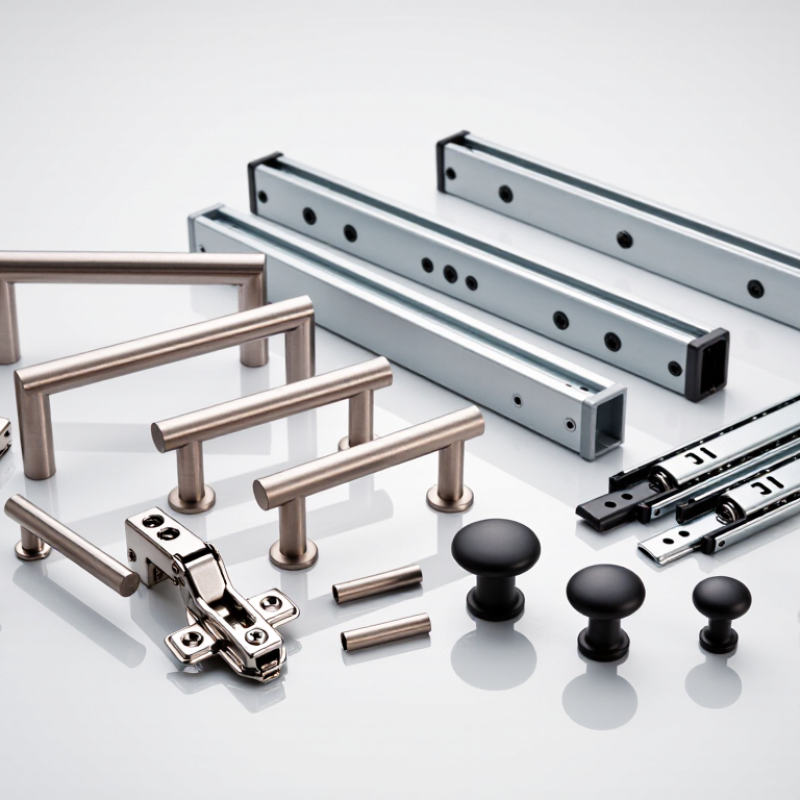
What Products Define China’s Cabinet Hardware Supply Chain: Hinges, Slides, and Pulls?
China’s cabinet hardware supply chain is defined by three practical components: hinges, drawer slides, and pulls. The China National Furniture Association reported that furniture makers above designated size earned 655.7 billion yuan in operating revenue in 2023, with total profits of 34.2 billion yuan. These figures describe the wider furniture sector, not hardware alone, but they show the scale of the downstream market suppliers serve.
Hinges determine door alignment and opening feel. Buyers commonly compare opening angles, load ratings, corrosion resistance, and cycle-test results.
Slides need consistent travel, stable load performance, and dependable soft-close action. A drawer carrying cookware exposes weak rollers quickly.
Pulls seem simpler, yet hole spacing, finish consistency, and edge comfort affect installation and daily use. Small parts matter.
Supplier comparisons should go beyond catalogue photos. Ask for material specifications, test methods, tolerance ranges, and sample pieces from the actual production line. For example, check whether a hinge stays aligned after repeated opening, and whether slide rails move smoothly under a realistic drawer load. China Customs data groups many furniture fittings within broad product classifications, so trade totals alone cannot show which factories specialize in hinges, slides, or pulls. That distinction is easy to miss. I would also treat polished samples cautiously: production batches may vary, and a specification sheet cannot reveal every finish defect.
Which Standards Measure Quality: EN 15570 Hinges, EN 15338 Slides, and ISO 9227 Corrosion?
For buyers comparing kitchen cabinet hardware suppliers in China, standards offer a clearer starting point than polished product photos. EN 15570 covers strength and durability testing for furniture hinges. It helps assess how a hinge performs under specified loads and repeated opening cycles. Ask for the test report, including the tested model and configuration. A report for one hinge may not represent every finish or mounting option.
EN 15338 addresses strength and durability tests for furniture extension elements, including drawer slides. Check that the tested slide matches the load rating and installation conditions you need.
ISO 9227 uses salt-spray methods to evaluate corrosion resistance under controlled conditions. It does not predict exactly how many years a fitting will last in a kitchen.
That distinction matters.
Review the exposure method, test duration, and visible corrosion criteria rather than relying on a bare “passed” claim. Even a tidy report can leave gaps: production batches, plating thickness, and packaging may affect the hardware you receive. Request traceable, product-specific records and inspect physical samples. Standards help compare evidence, but they cannot replace careful checks of fit, movement, and finish.
Who Are China’s Leading Cabinet Hardware Suppliers, and What Do They Specialize In?
China’s leading cabinet hardware suppliers often specialize in distinct product groups rather than making every component equally well. Some factories focus on hinges, producing soft-close models with adjustable mounting plates for precise door alignment. Others concentrate on drawer slides, from compact side-mount designs to concealed runners for wider drawers. Pulls, knobs, lift-up stays, and wire organizers are common specialties too. A supplier’s real strength is best judged by its machining consistency, finish quality, and ability to maintain specifications across repeat orders—not by a broad catalog alone.
Tips: Request samples in your intended finish and test them on the actual cabinet material. Check screw length, hole spacing, door weight, and drawer load. Ask how the supplier inspects plating, movement, and packaging. A smooth sample is useful, but it does not prove that every production batch will match. Written tolerances and clear inspection records help reduce surprises.
Many experienced buyers compare two or three suppliers using the same drawings and test conditions. Look closely at hinge adjustment, slide noise, and whether handles feel comfortable after repeated use. Some details are easy to overlook. For example, a thick coating can change how tightly a screw fits. A careful supplier should explain these trade-offs and provide practical product guidance, not simply promise that every option is “premium.”
Who Are the Top Kitchen Cabinet Hardware Suppliers in China? — Who Are China’s Leading Cabinet Hardware Suppliers, and What Do They Specialize In?
This overview groups common supplier types in China’s cabinet-hardware sector by their main areas of specialization. It is a category guide, not a ranking of named companies.
| Supplier Category | Main Specialization | Common Products | Typical Materials and Features | What Buyers Should Check |
|---|---|---|---|---|
| Cabinet hinge manufacturers | Hardware for attaching cabinet doors and controlling their movement. | Concealed hinges, soft-close hinges, clip-on hinges, and hinges with different opening angles. | Often made from steel or stainless steel; available with adjustable mounting plates and integrated or separate damping mechanisms. | Confirm door overlay and thickness compatibility, opening angle, adjustment range, corrosion-resistance requirements, and tested cycle performance. |
| Drawer slide and runner manufacturers | Sliding mechanisms for kitchen drawers and pull-out storage units. | Ball-bearing slides, undermount slides, soft-close runners, and heavy-duty drawer slides. | Commonly manufactured from steel, with finishes and load capacities varying by model and intended application. | Check slide length, installation clearance, extension type, specified load rating, closing mechanism, and installation instructions. |
| Drawer-system manufacturers | Coordinated drawer components designed to work together as a complete system. | Metal drawer sides, runners, front connectors, adjustment parts, and internal drawer accessories. | Systems may combine formed steel components with adjustable fittings and optional soft-close runners. | Verify component compatibility, available drawer dimensions, adjustment options, finish consistency, and the availability of replacement parts. |
| Cabinet handle and knob manufacturers | Decorative and functional pulls for cabinet doors and drawers. | Bar pulls, cup pulls, knobs, edge pulls, and recessed pulls. | Common materials include zinc alloy, aluminum, stainless steel, and iron; finishes vary by product and production process. | Request finish samples and check center-to-center hole spacing, surface quality, corrosion resistance, and consistency across production batches. |
| Lift-system and stay manufacturers | Opening and holding mechanisms for upward-opening or flap-style cabinet doors. | Gas stays, lift mechanisms, flap fittings, and related mounting hardware. | Mechanisms are selected according to door size, weight, opening direction, and desired motion; configurations differ across product lines. | Provide accurate door dimensions and weight, then confirm the mechanism’s application range, adjustment method, and installation space. |
| Integrated OEM/ODM hardware suppliers | Multiple cabinet-hardware categories, often with product customization or coordinated sourcing services. | Depending on the supplier, products may include hinges, slides, handles, lift systems, and cabinet accessories. | Capabilities vary; some suppliers offer customized finishes, packaging, product specifications, or combined product assortments. | Assess which products are made in-house versus sourced from partners, and request samples, specifications, quality-control details, and export documentation. |
How Do Suppliers Compare on Load Capacity, Cycle Life, Finish, and Minimum Order Quantity?
Chinese kitchen cabinet hardware suppliers are best compared through test conditions, not headline claims. Load capacity depends on the product: a drawer slide and a concealed hinge carry weight differently. Ask suppliers for the rated load per pair or unit, plus the test setup. Was the drawer loaded evenly, or with weight near the front? Small details change results.
Cycle life matters too. Request the tested opening-and-closing count and confirm whether the sample carried its rated load. A large number alone proves little. Finish quality should be checked on the actual coating, with clear information about the test method and exposure time. Look closely at edges and screw holes; thin coverage often shows there first.
MOQ can favor different suppliers. Stock finishes may be available in modest quantities, while custom colors or packaging can require a larger order. Get sample costs, production lead times, and reorder terms in writing. I would not rank a supplier from one polished sample. Samples can be unusually well prepared. Compare several units, and note any inconsistency.
What Should Buyers Verify in Factory Audits, Certifications, Lead Times, and Export Records?
A useful factory audit goes beyond a polished showroom. Inspect the actual production line and compare cabinet pulls, hinges, and knobs with approved samples. Check plating for color variation, sharp edges, and thin spots around screw holes. Ask how workers record defects and whether rejected pieces are rechecked. A clean sample can still hide uneven finishing in a full production run. Details matter.
Review certificates directly, including the issuing body, validity dates, and product scope. A document for one material or facility may not cover the hardware being quoted. Verify that the factory name and address match the supplier’s business records. Request recent inspection reports when available. Paperwork matters, but it is not proof of consistent quality.
For lead times, ask for separate estimates covering samples, production, packing, and shipment. Compare promised schedules with recent orders and confirm how peak-season delays are handled. Check export records through invoices, packing lists, or shipping documents, with sensitive information appropriately redacted. Look for consistent product descriptions, quantities, and shipment dates. Still, records can be incomplete. Treat gaps as questions to resolve, not automatic evidence of a problem. A written quality plan and clear order milestones make later discussions more precise.
FAQS
Hinges, drawer slides, and pulls are the main components. Small parts matter.
Compare opening angle, load rating, corrosion resistance, and cycle-test results. Check whether the hinge stays aligned after repeated use.
Test smooth travel and soft-close action under a realistic drawer load. Cookware can expose weak rollers quickly.
Check hole spacing, finish consistency, and edge comfort. These details affect installation and daily handling.
Ask for rated load, test setup, and opening-and-closing counts. Confirm whether the sample carried its rated load. A large test number alone proves little.
Request the test method and exposure time. Inspect edges and screw holes, where thin coating may show first.
Stock finishes may suit smaller orders. Custom colors or packaging can require larger quantities. Get sample costs, lead times, and reorder terms in writing.
No. Compare several samples from actual production, and note inconsistencies. I may be too cautious, but one polished sample can hide batch variation.
No. The reported 2023 revenue covered larger furniture makers, not hardware alone. Broad trade classifications also cannot identify specialist factories.
Conclusion
China’s Kitchen Cabinet Hardware supply chain is built around three core product groups: hinges, drawer slides, and pulls. Buyers can assess product quality through relevant testing benchmarks, including EN 15570 for hinges, EN 15338 for slides, and ISO 9227 for corrosion resistance. These standards help create a consistent basis for evaluating performance, but specifications and test results should be checked against the intended application and project requirements.
Leading suppliers may specialize in different product categories, finishes, or production capabilities, so comparisons should consider load capacity, cycle life, surface durability, and minimum order quantities. Before placing an order, buyers should also verify factory processes, quality certifications, realistic lead times, and export experience. Clear documentation, sample testing, and direct confirmation of production capacity can help reduce sourcing risks and support a dependable long-term supply relationship.

Blog Tags: